Cook and Catering Jobs on Bulk Carriers: What the Role Actually Involves
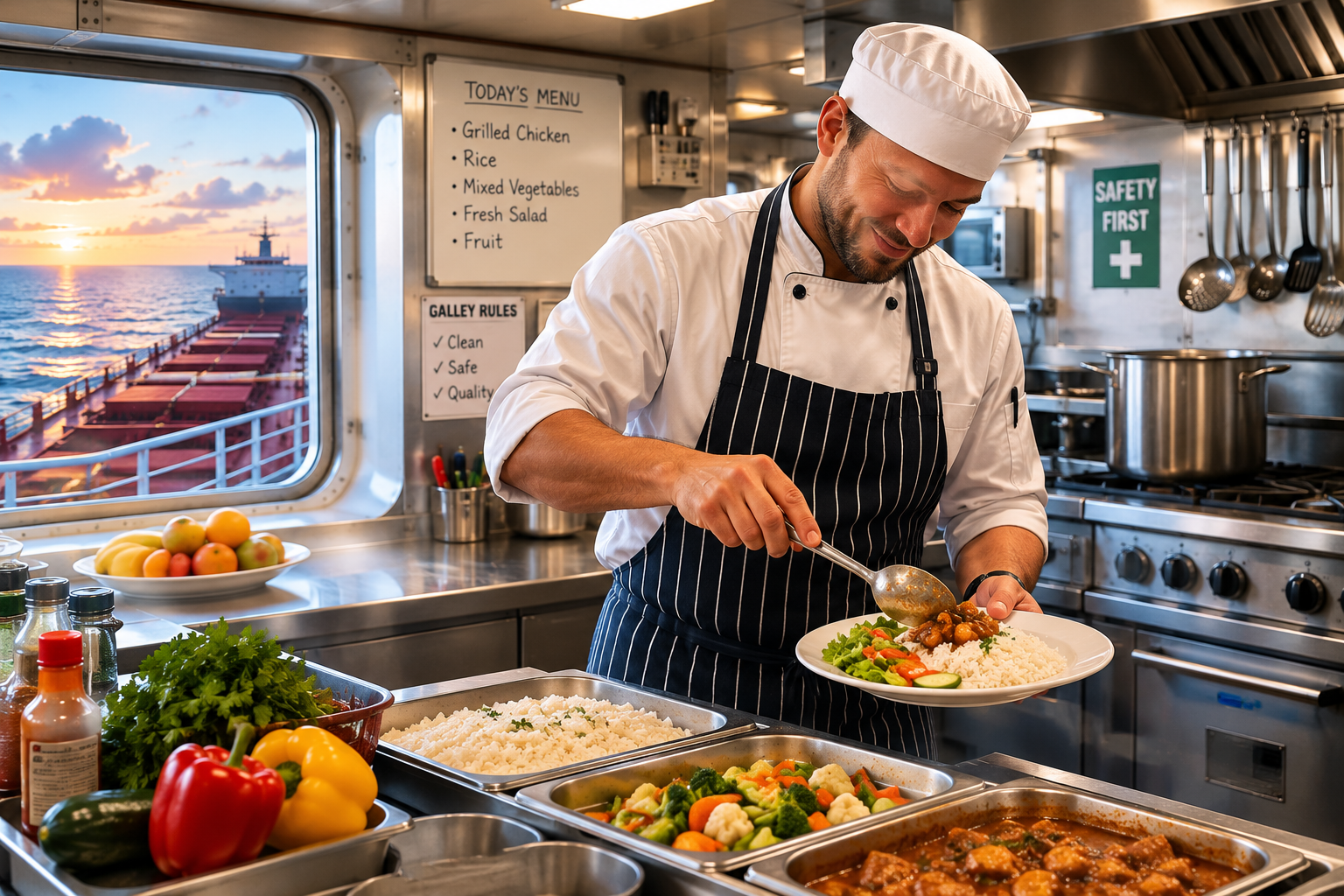
The cook on a bulk carrier feeds the same group of people three times a day for months. It is a straightforward description of a role that requires more skill and adaptability than it sounds.
**The Operational Reality**
A bulk carrier crew of eighteen to twenty-four people. Three meals. Every day. The same people at every meal. The cook’s output is the most consistent point of contact between the vessel and the crew’s daily quality of life.
Stores management is the other half of the job. The cook plans provision orders at each port where fresh supplies are accessible. The vessel may spend three to four weeks between port calls on some trades. Running short of basic provisions mid-passage is a failure with obvious consequences.
Menu planning across nationalities. Most bulk carrier crews are multinational. A Filipino AB and an Eastern European officer and a South Asian motorman have different food preferences and cultural contexts. The cook who navigates this thoughtfully produces better crew morale than one who defaults to a single national cuisine throughout.
**What the Job Requires**
Ship cook certificate. The specific requirement depends on the flag state. Most require a formal catering certificate or cook qualification alongside the maritime document.
STCW Basic Safety Training. Required for all crew on internationally trading vessels without exception.
**Pay**
$1,500 to $2,500 per month on bulk carriers. LNG carriers and offshore vessels pay toward the higher end. The catering premium exists on premium vessel types in the same way it does for other crew positions.
**The Reality of the Role**
The cook rarely gets mentioned in maritime career discussions. They get mentioned constantly on board. The vessel where the cook takes the job seriously is a better place to work. The vessel where they do not is noticeably worse. This is a simple and consistent truth across all vessel types.