
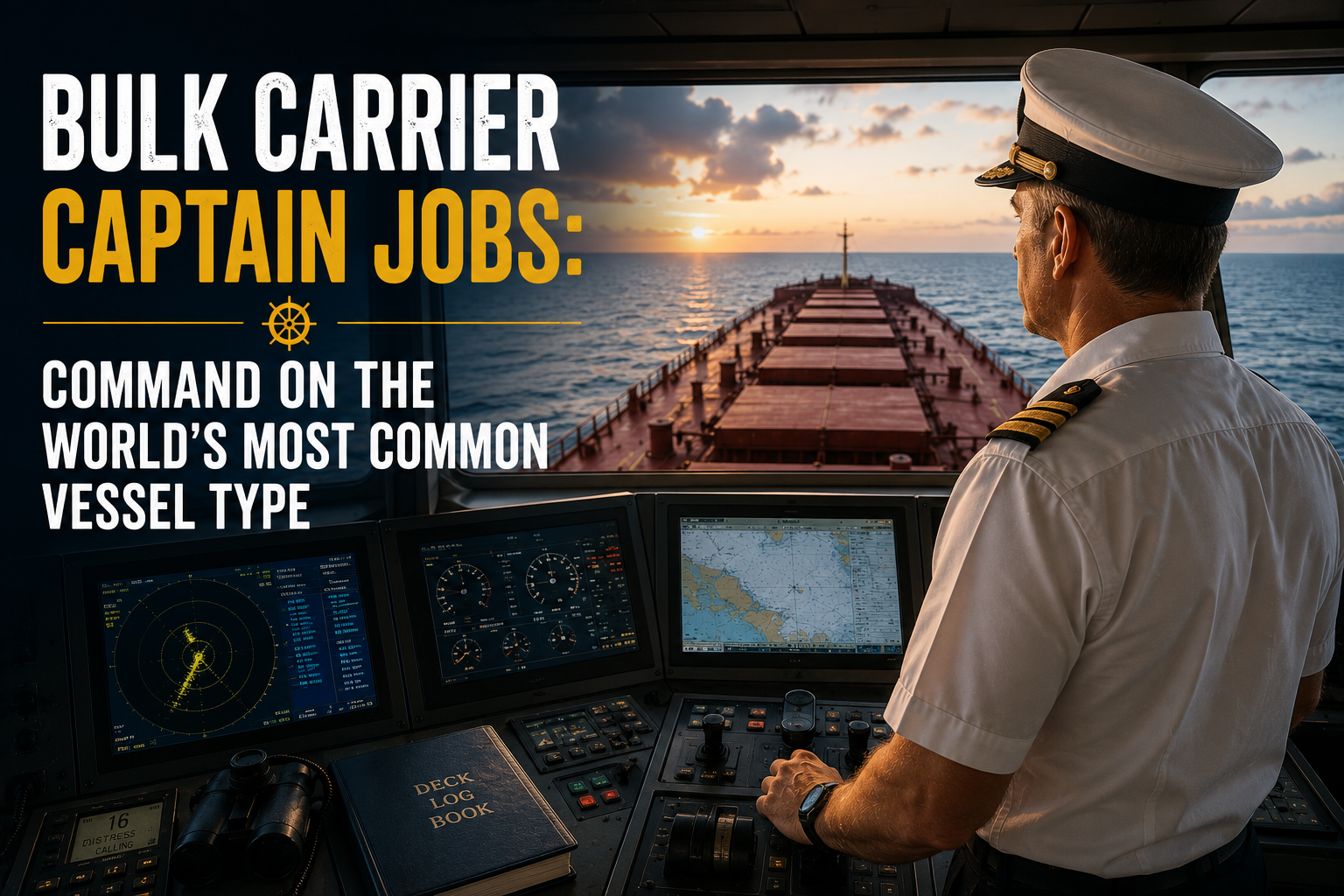
Bulk Carrier Captain Jobs: Command on the World’s Most Common Vessel Type
The majority of ship masters in the world command bulk carriers. The vessel type employs more seafarers than any other and the master’s role reflects the specific operational demands of dry bulk shipping.
**What Bulk Carrier Command Involves**
Voyage planning and execution across long ocean passages. Bulk carrier passages are measured in weeks. The Cape of Good Hope, the Suez Canal, the Drake Passage. The master approves the passage plan and takes command at port entries, in restricted waters and whenever conditions require it.
Commercial communication with the charterer. Bulk carrier masters interact with charter parties more directly than officers on liner services. Cargo quantity disputes, draft survey discrepancies, laytime calculations. The master needs working knowledge of the commercial framework.
PSC preparation and the inspection itself. The master leads the PSC inspection when port state officers board. The quality of the vessel’s SMS documentation, maintenance records and crew certificate status reflects on the master directly.
Crew management. A bulk carrier crew of eighteen to twenty-four people over a four to six month contract. The master sets the tone. Vessels where the master creates a functional professional environment produce better outcomes in PSC, maintenance and crew welfare than those where they do not.
**Pay**
$8,000 to $12,000 per month on standard bulk carrier agreements. Larger Capesize operators at the upper end. Smaller operators at the lower end. The tanker and gas carrier master rates are higher. The bulk carrier rates are more stable and the positions more numerous.
**Getting to Command**
Chief officer sea service documented across a variety of conditions. Management-level deck certificate from the flag state. Oral examination that rewards operational experience. The route is clear. The timeline is twelve to twenty years from cadet entry for most masters.