The deck officer career on bulk carriers follows the same structure as the rest of merchant shipping. The certificates are the same, the ranks are the same, and the sea service requirements are the same. What differs is the day-to-day work that fills those years and the operators available at each stage.
The Ranks and What They Actually Do
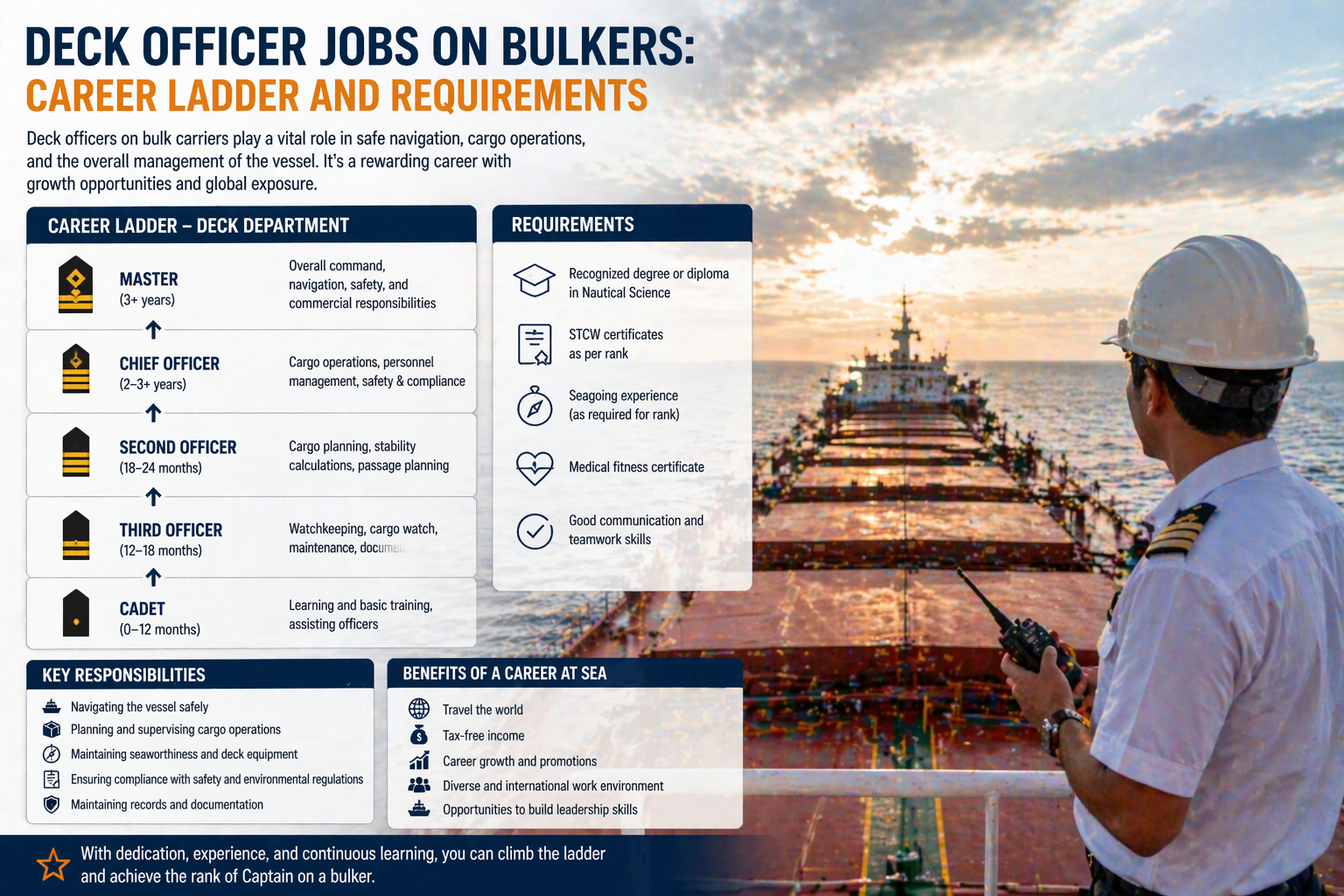
Third Officer is the entry point for certificated deck officers. On a bulk carrier the third officer typically holds the OICEW watchkeeping certificate and stands navigation watches independently. Additional responsibilities vary by vessel size and operator but commonly include maintaining safety equipment, emergency procedures documentation, and assisting with cargo operations in port.
The third officer position is where most cadet graduates begin. The gap between what the cadet programme prepares you for and what independent watchkeeping actually demands is real. The first few months of standing watches alone, making decisions without a senior officer standing behind you, is where real learning happens.
The second Officer carries more weight. Navigation is a primary responsibility on many bulk carriers, which means managing charts, publications, voyage planning and GMDSS communications alongside watchkeeping. The second officer on a large Capesize vessel manages the vessel’s chart outfit and electronic navigation systems. It is more responsibility than the rank sometimes gets credit for.
The Chief Officer is head of the deck department. Cargo work is the defining responsibility on a bulk carrier. Loading plans, stability calculations, hold cleaning programmes, hatch cover maintenance, draught surveys. The chief officer deals directly with port agents, surveyors and charterer’s representatives during cargo operations. On a vessel carrying cargo worth tens of millions of dollars, getting the cargo work right is not a supporting role.
The master has overall command and legal responsibility for the vessel, crew, cargo and environment. On bulk carriers the master spends significant time on commercial matters alongside the operational ones. Laytime calculations, letters of protest, communication with the operator and charterer on cargo claims. The commercial dimension of bulk carrier command is larger than many junior officers expect when they picture the master’s role.
Certificates Required
Officer of the Watch certificate under STCW II/1 is the foundation for third officer and second officer. Obtained after completing an approved deck officer programme and the required sea service as a cadet.
Chief Mate and Master certificates under STCW II/2 are required for the senior positions. These come after further sea service, additional training and examination. The chief mate certificate is the stepping stone to chief officer positions. The master certificate opens the command.
GMDSS General Operator’s Certificate is required for most officer positions on vessels operating beyond coastal waters. Part of standard officer training programmes in most countries.
Additional endorsements for specific operating areas or vessel types may be required by individual operators or flag states above the STCW minimum.
How Long the Career Takes
Cadet to third officer: typically three to four years through an approved cadet programme combining academic study with shipboard training phases.
Third to second officer: one to three years of sea service at third officer rank. The timeline depends on the vessel, how watchkeeping hours accumulate and when the officer decides to pursue the next certificate.
Second to chief officer: another two to four years. The chief mate certificate examination is the main gate here. Different countries run different examination systems. Some are straightforward. Some require significant preparation.
Chief officer to master: varies enormously. Some officers spend years as chief officer before a command position becomes available or before they feel ready. Others move quickly. The master certificate can be held for years before a command is offered.
Total time from starting a cadet programme to sitting in the master’s chair: typically ten to fifteen years for officers who progress steadily. Faster is possible. Slower is common.
What Bulk Carrier Experience Adds
Cargo work experience on bulk carriers is genuinely valued. The hatch cover management, draught surveying, hold condition assessment and bulk cargo stability work that chief officers do on bulkers is not found in other vessel types. These are transferable skills that open doors to shore-side roles in chartering, port operations and cargo surveying.
The navigation experience is solid and universal. Watch hours at sea are watch hours at sea regardless of vessel type, and the bulk carrier sea lanes cross every major ocean.
The commercial awareness built at master level, dealing with cargo claims, laytime disputes and charterer demands, is directly applicable to shore-side commercial roles that many officers move into after command careers.