Ship size affects almost everything about the job on a bulk carrier. The certificate requirements are the same. The rank structure is the same. The daily experience is different.
The Size Categories
Handymax and Supramax bulk carriers sit in the 45,000 to 65,000 deadweight tonne range. They carry their own cranes, giving them access to ports without shore-based cargo handling equipment. Wide global port range.
Panamax vessels around 65,000 to 80,000 dwt are sized for traditional Panama Canal transits.
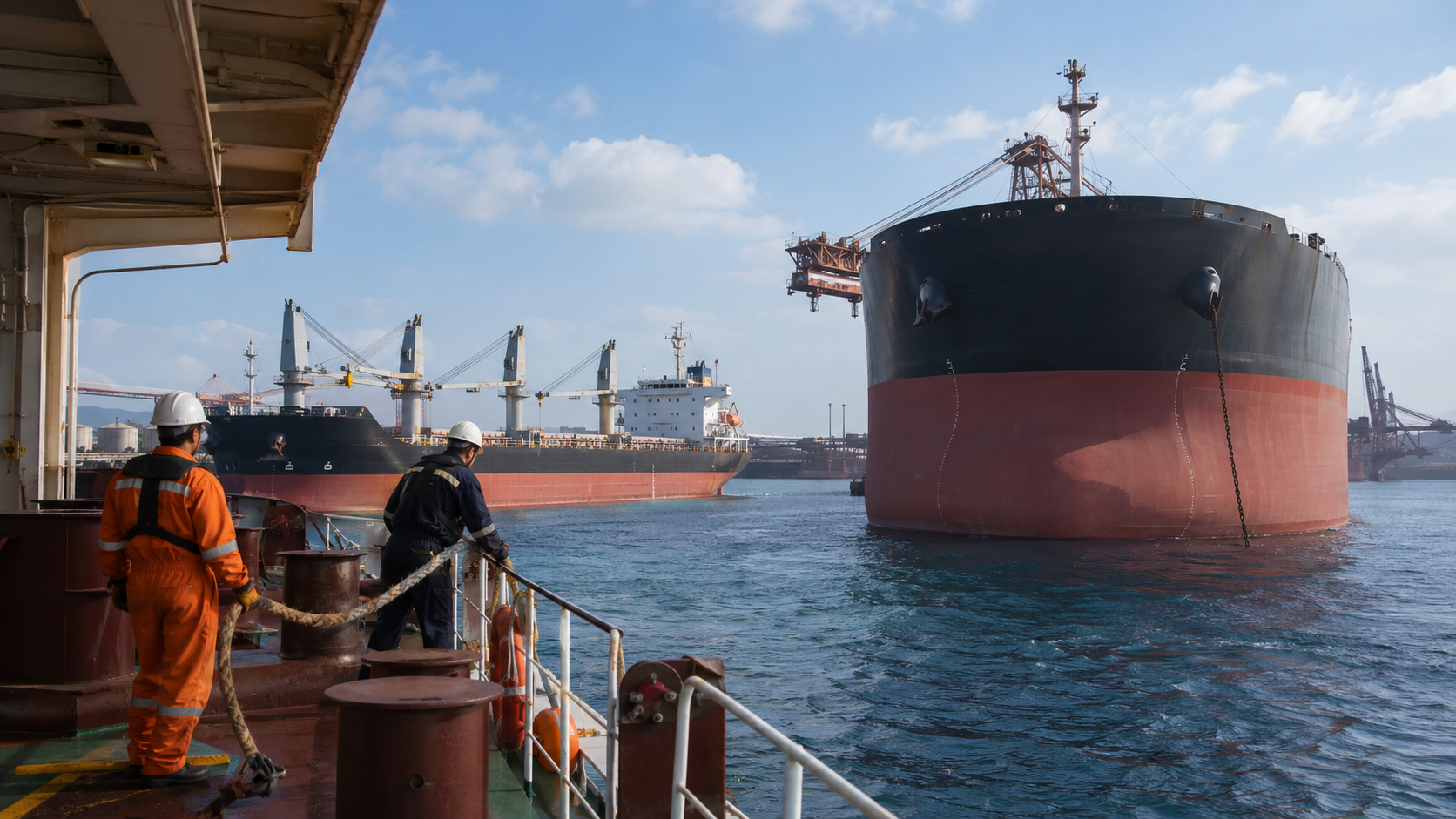
Capesize bulk carriers start at around 100,000 dwt and run to 200,000 and beyond. Too large for the Panama and Suez canals. No cranes. Dependent entirely on shore equipment. Call at a limited range of dedicated terminals.
Port Experience
On a Handymax or Supramax the port range is genuinely wide. Smaller ports, regional terminals, places that Capesize vessels never see. An officer on a Handysize bulker over several years visits a diverse range of global ports.
Capesize vessels operate on a limited circuit. Major iron ore terminals in Australia and Brazil. Large coal terminals. The same handful of deep-water facilities. The scale is impressive. The variety is not.
Cargo Operations
On geared bulkers the deck officers manage the vessel’s own cranes during cargo operations. This is a genuine operational skill with practical value and it does not exist on gearless Capesize vessels where shore cranes do everything.
Pay
Capesize operators pay more than Handysize at equivalent rank. A chief officer on a 180,000 dwt vessel with a major operator earns more than the same rank on a 30,000 dwt Handysize. The scale premium is real.
For officers early in careers wanting broad experience, smaller vessels deliver more variety. For officers optimising for pay at senior rank, larger vessels pay more.