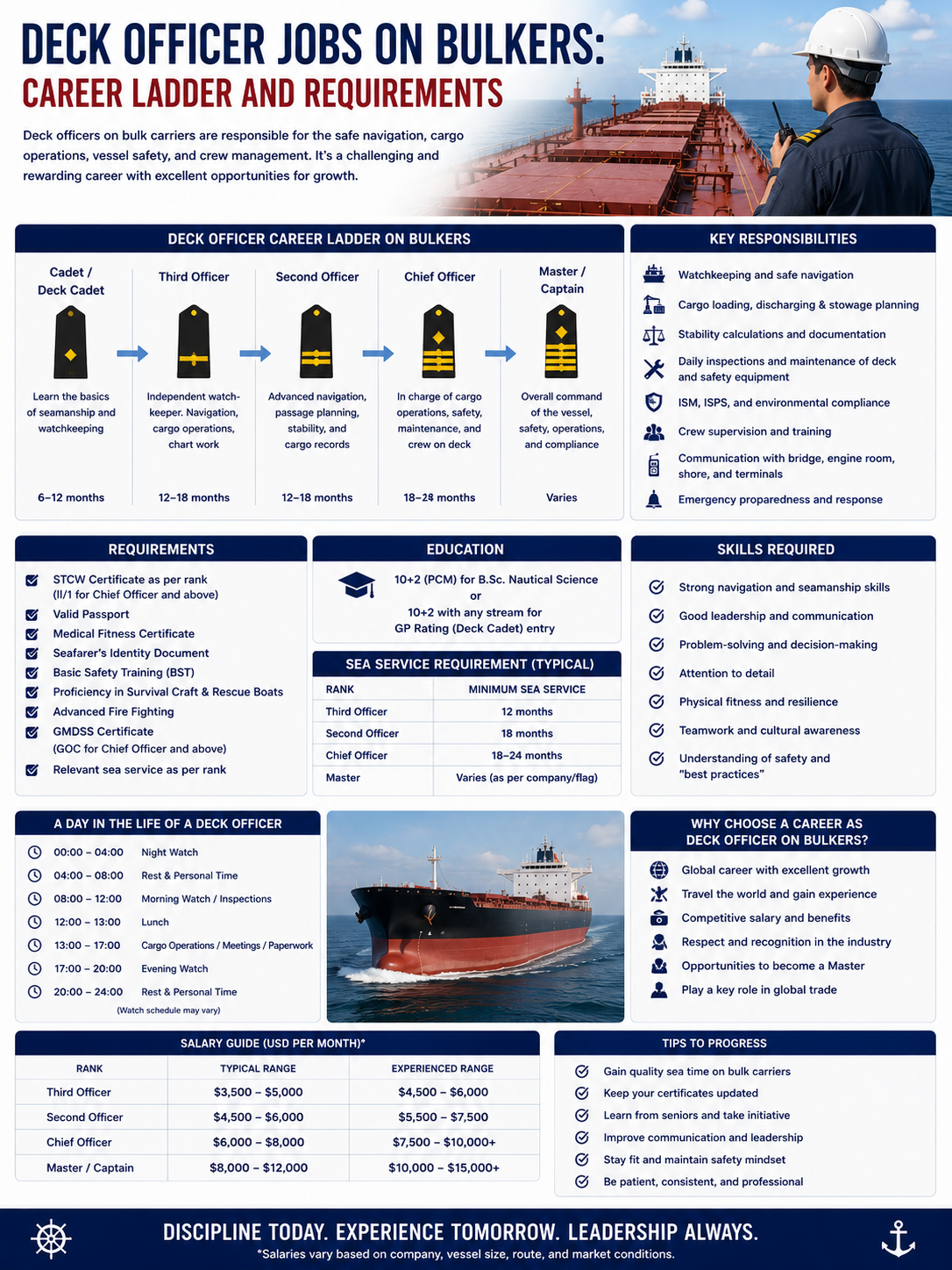
Deck officer careers on bulk carriers follow the same structure as merchant shipping generally. The certificates are the same, the sea service requirements are the same and the progression from third officer to master follows the same pattern. What differs is the operational character of the work and how that experience translates later.
Third Officer
Entry-level watchkeeping. Independent bridge watches, safety equipment maintenance, cargo watch duties during port operations. The first months of standing watches alone reveal the gap between what the cadet programme taught and what independent watchkeeping actually requires.
Officers who engage actively during this period, who seek to understand the full operation beyond their watch hours, develop faster than those who stand their watches and wait for the next certificate eligibility.
Second Officer
Navigation officer on most bulk carriers. Voyage planning, chart management, GMDSS, watchkeeping. More administrative responsibility than the third officer position.
Chief Officer
Head of the deck department. Cargo operations are the primary bulk carrier-specific responsibility. Loading plans, stability calculations, hatch cover management, draught surveys. The chief officer deals directly with port agents, surveyors and charterer’s representatives during cargo operations.
On a vessel carrying cargo worth tens of millions of dollars, the chief officer’s cargo work competence is not a supporting role.
Master
Command. Navigation is a fraction of the role at this level. Commercial obligations, laytime calculations, letters of protest, cargo claims, port state control, crew management, operator communication: this is the master’s daily work on a bulk carrier.
Pay Summary
Third Officer: $2,800 to $5,000 Chief Officer: $6,500 to $11,000 Master: $8,500 to $14,000