
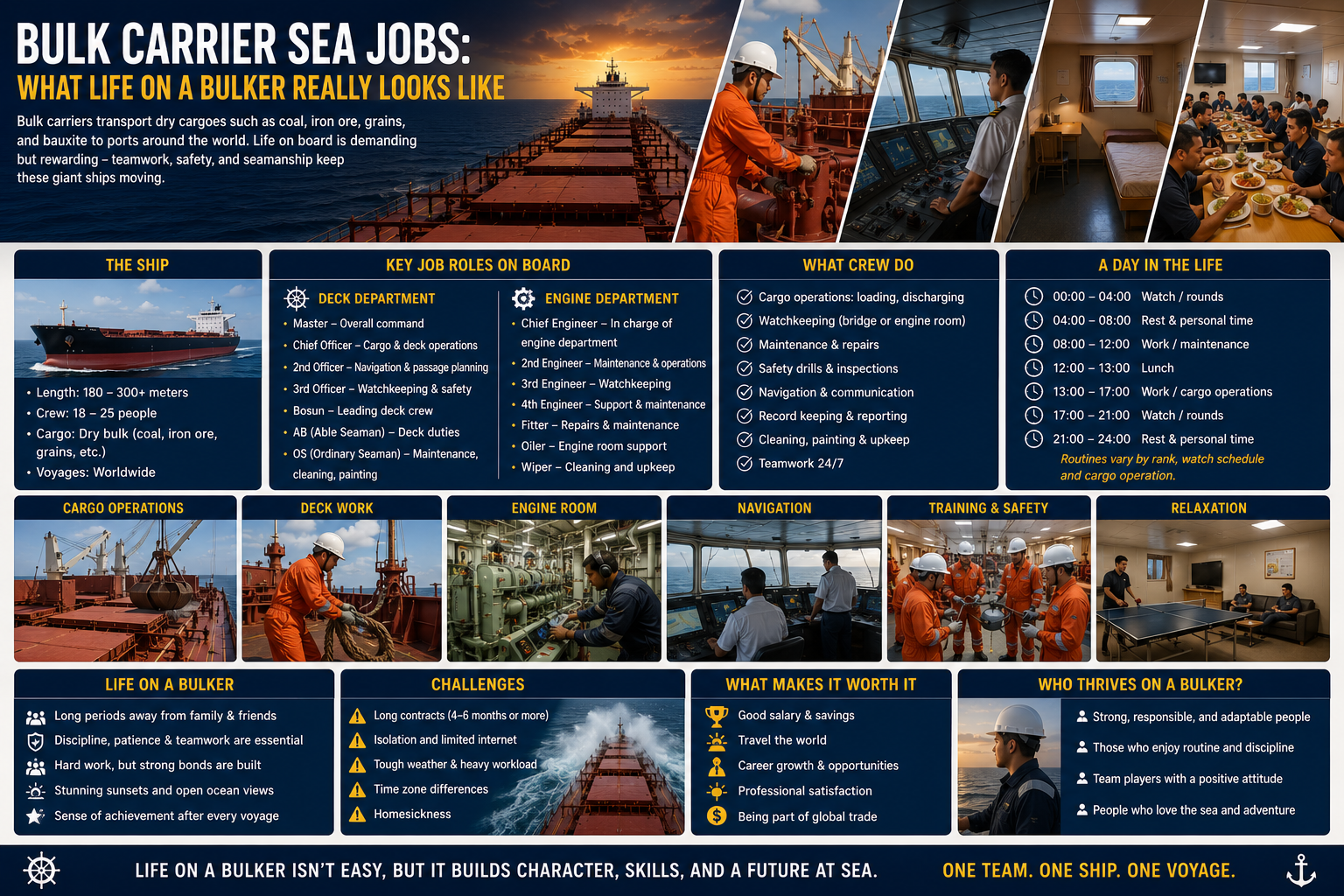
Bulk carriers are the most common vessel type in the world fleet by number. More seafarers work on them than any other single vessel type. The work is honest, physical and not particularly glamorous. It suits specific people well.
The Vessel
A bulk carrier is a large steel box divided into holds. Hatch cove
rs on top, cranes or shore equipment to load and discharge, engine room and accommodation at one end. The deck is functional rather than aesthetic.
Size varies from small Handysize vessels of 25,000 to 40,000 tonnes to Capesize ships exceeding 150,000 tonnes. The size affects which ports you call at, how long cargo operations take and how the ship handles in different sea states. Smaller bulkers have better port variety. Capesize vessels are limited to a handful of deep-water terminals globally but they pay better at senior ranks.
At Sea
Four on, eight off. The watch rotation runs continuously through the sea passage. Bridge lookout for deck officers and ABs, engine room monitoring for engineers.
Between watches: maintenance. This is the defining feature of bulk carrier AB work. The maintenance load is high and continuous. Rust prevention on a vessel that works hard in all weather is never finished. Hatch covers, deck fittings, mooring equipment, safety gear: all require regular inspection and upkeep.
Officers between watches handle administrative work, cargo documentation, planned maintenance management. The sea passage on a bulk carrier is predictable and routine. Whether that is comfortable or monotonous depends entirely on the individual.
Cargo Operations
Hatches open, cargo goes in or out, hatches close. Compared to tanker cargo work this is straightforward.
But hatch cover sealing is critical. A hold that takes water during a passage can damage or destroy cargo. The financial and legal consequences follow the chief officer. Hold cleaning between cargo grades matters for the same reason. ABs who understand why these tasks are important do them better than those following a checklist.
Loading sequences matter for hull stress. A chief officer who gets the loading sequence wrong can overstress the vessel structure. This has caused structural failures.
Port Time
Bulk carriers spend more time in port than tankers. Loading grain through shore elevators or discharging iron ore by grab takes days at most terminals. Port stays of two to four days are common.
Shore leave actually happens on bulk carriers in a way it does not on modern tankers. This is a meaningful lifestyle advantage for seafarers who value port time.
Pay
Below tankers and offshore at equivalent rank. The accessible entry and lower specialisation requirements are reflected in the pay. Worth knowing before choosing the sector as a long-term destination.